
Whose Side Are Wisconsin’s Leaders On?
Safe Clean Water or More Pollution?
Call to action
President Trump vowed that his administration would deliver the “cleanest air and water on
But what’s he doing? His administration is rolling back and severely weakening federal Clean
Water Act protections, thereby putting Wisconsin’s waters at risk.
The Driftless Area’s rivers, streams and groundwater must be protected.
Tell President Trump : Keep your “cleanest water” promise.
White House: 202-456-1111
Wisconsin Leaders: Protect Safe Clean Water
Representative Van Orden: (202) 225-5506
Senator Baldwin: (202) 224-5653
Senator Johnson: (202) 224-5323
Why Clean Water is at Risk in the Driftless Area?
Southwest Wisconsin has a unique landscape that makes its water supplies vulnerable.
Much of the area sits on cracked limestone and sandstone covered by shallow soil. Because of this, water and pollution can move quickly from the surface into the groundwater below.
That groundwater provides drinking water for homes, farms, and communities, so groundwater pollution is a significant public health problem.
Manure Runoff Is a Major Source of Pollution
Southwest Wisconsin has always had a lot of dairies, but cows are increasingly being concentrated into a smaller number of large “concentrated animal feeding operations.” These CAFOs produce huge amounts of manure, mixed with other liquid wastes that is stored in huge lagoons and spread on fields.
There is way too much manure for the crops to absorb. It flows or is washed by rain into groundwater, streams, and rivers, causing harmful algae , limiting outdoor recreation, and contaminating drinking water sources.
Contaminated Drinking Water
There are troubling results in private wells across the region.
Wisconsin’s 2025 Groundwater Coordinating Council report identifies nitrates as the state’s most widespread groundwater contaminant and confirms that private wells remain at continued risk of contamination. In heavily farmed areas of the state, 20% to 30% of private well samples have exceeded that standard. Consistent exposure to nitrates is linked to increased rates of bladder, kidney, prostate, and thyroid cancer.
And just a few years ago, researchers found that 42% of tested wells in Grant, Iowa, and Lafayette Counties contained either E. coli, unsafe nitrate levels, or both. Other concerns are:
Bacterial contamination, which can come from human or animal waste.
Phosphorus pollution, which can cause harmful algae outbreaks in lakes and rivers.
Many of these pollutants cannot be seen, smelled, or tasted.
Clean Water Protections Matter
For generations, Wisconsin has worked to protect the rivers, streams, lakes, and groundwater that communities rely on. Those protections matter because once water becomes contaminated, families and local governments often bear the costs.
The Trump administration and some federal elected officials are working to roll back and severely weaken federal Clean Water Act protections and reduce oversight designed to prevent pollution before it happens.
Southwest Wisconsin deserves leaders who will stand up for our safe clean water, strengthen federal and state protections that work, and ensure that future generations can enjoy our rivers, trout streams, and drinking water resources.
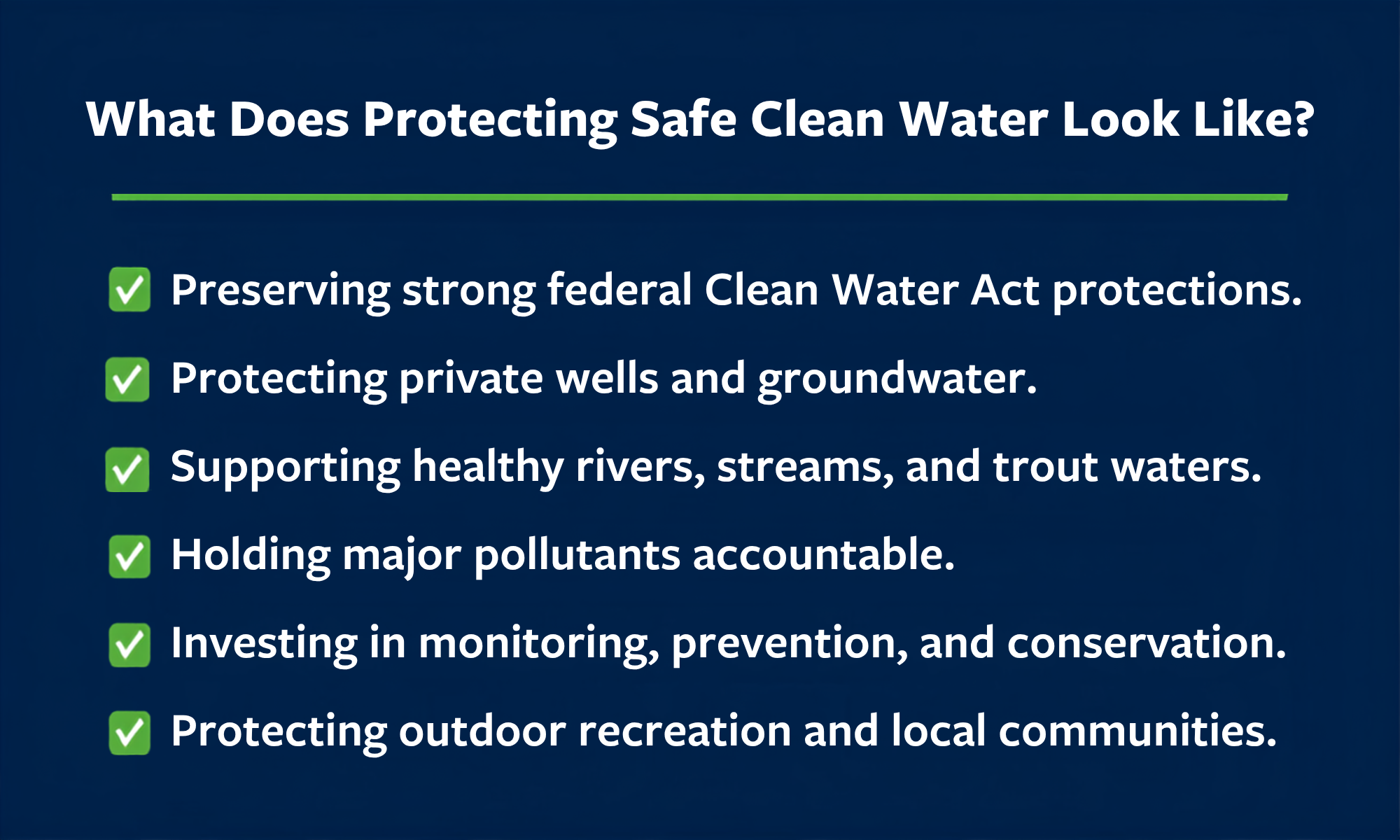
It’s Time to Take Action. Wisconsin’s elected leaders should:
Preserve and strengthen state and federal clean water protections.
Hold large CAFOs accountable for pollution.
Reduce manure and nutrient pollution.
Invest in water monitoring, enforcement, and prevention.
Safe clean water is not a special interest. It is a basic need.