
Iowa Leaders
Whose Side Are You On:
Clean Water or Pollution?
Iowa’s Water Crisis Is No Accident
Iowa’s water quality crisis didn’t just happen overnight. It’s the direct result of policy choices that have prioritized powerful polluting interests over public health and safe clean water for many years. Across the state, our rivers, lakes, and drinking water sources are contaminated with nitrates, bacteria, and toxic pollutants, making clean water increasingly difficult and expensive to make drinkable for Iowans.
More than 700 waterways in Iowa are officially classified as “impaired,” meaning they are unsafe for fishing, swimming, or drinking without expensive treatment.
At the heart of this crisis lies one dominant driver: pollution from industrial agriculture.
Health Risks and Community Impacts
This pollution is a public health threat and costs all of us money.
Polluted water increases cancer risk; Iowa has the second highest cancer rate in the country and it’s rising.
Communities are forced to pay millions for water treatment systems, while excessive upstream pollution continues to flow downstream. In some cases, utilities must operate nitrate removal systems at tens of thousands of dollars per day. These costs fall on Iowans -- not polluters.
The Real Cause: Pollution is Getting into our Water Supplies
Iowa leads the nation in pork and egg production, but that success comes at a cost. Massive “factory farms” with thousands of pigs, hogs and chickens produce over 200 billion pounds of manure each year, far more waste than the state’s human population creates.
That manure and chemical fertilizers on crop fields are spread across millions of acres.
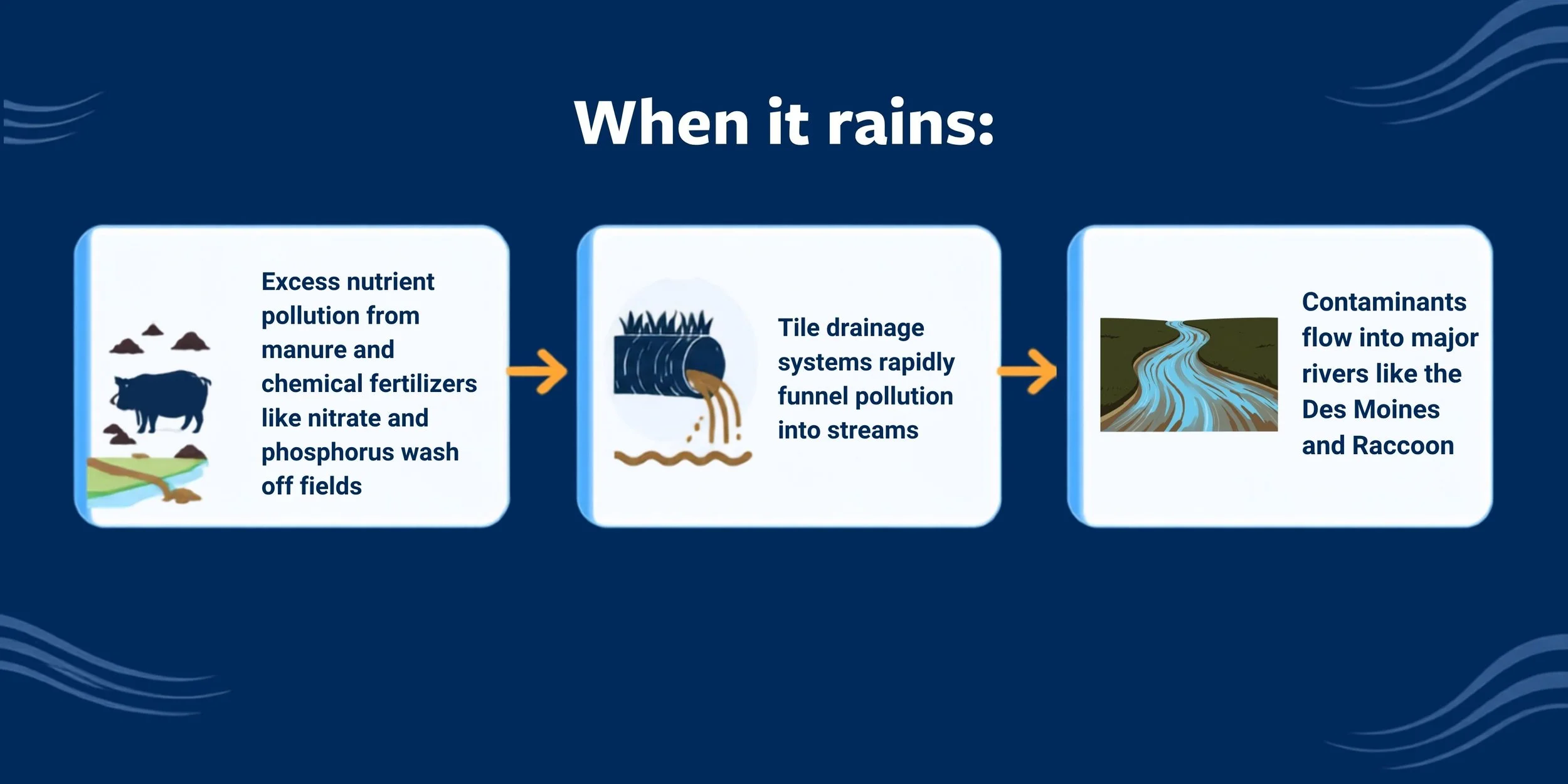
The result? Drinking water sources routinely exceed safe nitrate levels, forcing costly treatment. Just last summer, Des Moines residents were under water use restrictions. The Raccoon River and Des Moines River had dangerously high nitrate levels, and Central Iowa Water Works prohibited all residential, commercial, and government lawn watering to preserve essential drinking water treatment capacity.
It doesn’t have to be this way.
Weak Policies, Strong Consequences
The science is clear: nitrates and chemicals in our water are causing the problem. Approximately 80 percent of chemical and nutrient pollution originates from agricultural practices, primarily manure, fertilizer and pesticide uses.
Despite decades of evidence, Iowa’s approach to water quality has largely relied on voluntary conservation practices for pollution from industrial agriculture. This approach is not working. It is not solving the problems. Meanwhile:
Thousands of large-scale animal operations operate with limited or no meaningful oversight
Penalties for manure spills and pollution are often too low compared to the damage caused
Federal protections like the Clean Water Act face ongoing rollbacks, threatening removal of many existing safeguards
The science is clear. The impacts are visible.
Yet meaningful accountability remains absent.
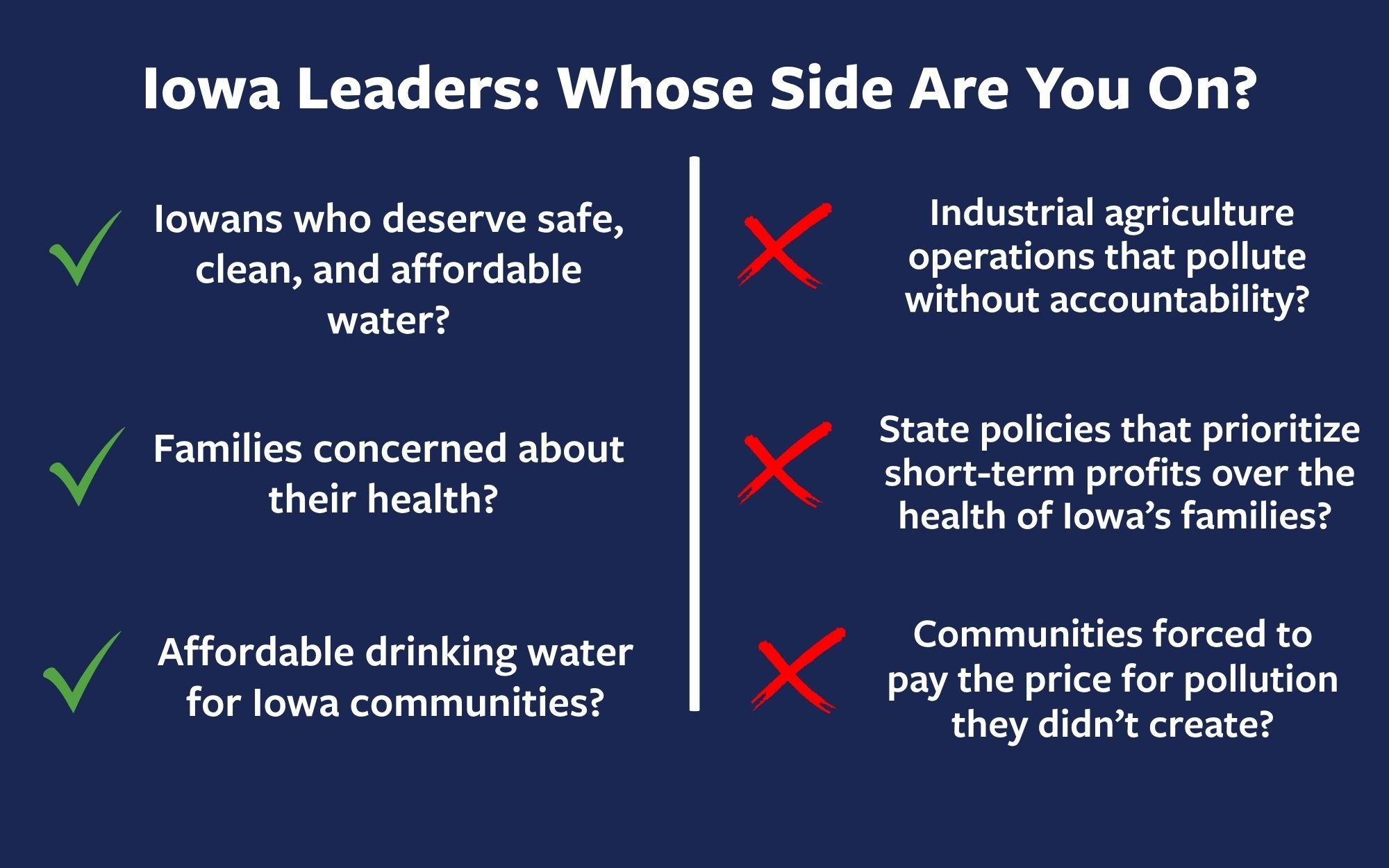
It’s Time for Leadership
The science is clear. The pollution is real. Families are dealing with the impacts right now.
Iowa’s water crisis is solvable, but only if leaders are willing to act:
Enforce strong, science-based water quality standards
Fund statewide water monitoring program
Reduce excessive application of manure, fertilizers and pesticides.
Hold polluters accountable for controlling manure and fertilizer pollution
Invest in proven conservation and pollution reduction strategies
Protect and strengthen the Clean Water Act
Safe clean water is not a partisan issue. It’s a basic need and right for all.